
Our Impact
Relationships Change Everything.
This is the measurable progress toward our 2050 vision.
Measurement Isn’t Just Something We Do, It’s Who We Are
It’s how we listen, learn, and continuously improve to better support those we have the honor of walking alongside. Through Customer First Measurement, we prioritize the voices of those we exist to support, ensuring their needs, perspectives, and insights shape programs that are tailored and unique.
The Differentiator
A one-size-fits-all approach does not work in foster care, and we refuse to build programs based on assumptions. By consistently gathering feedback, we ensure our programs remain relational, responsive, and rooted in real experience.
*2025 Measured Outcomes Across Central Texas
The Evidence of Transformation
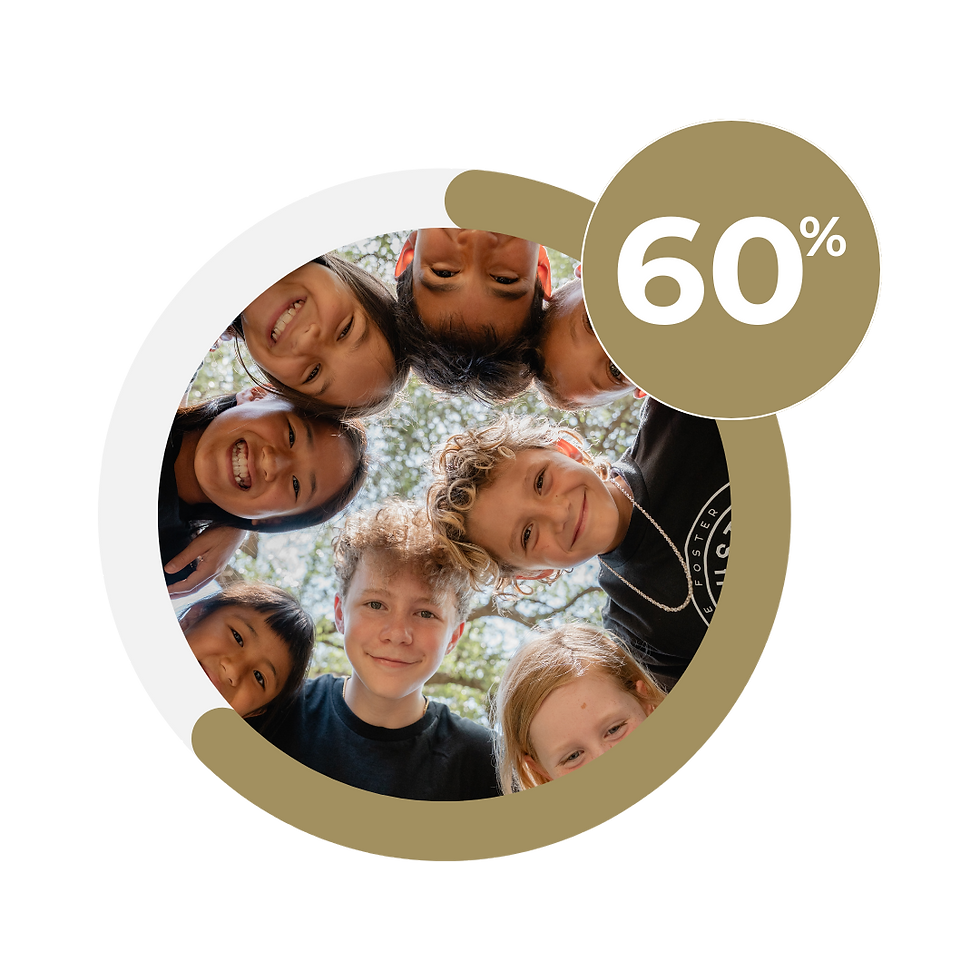
6 out of 10 caregivers shared that the support they receive from our programs has directly helped them keep children stably in their home.
Did you know…
Placement stability is one of the most fragile parts of the foster care experience.
Children often move from home to home, losing relationships, routines, and any sense of safety or continuity. Placement disruptions are one of the strongest predictors of long-term trauma.
Our programs were built to change this…
By surrounding caregivers and children with consistent, relationship-based support. In a system where instability is common and where nearly 50% of foster families discontinue fostering within their first year, having dependable people to lean on makes all the difference.
This level of stability is extraordinary. It means fewer placement changes, fewer broken connections, and more opportunities for children and caregivers to build trust, feel supported, and begin healing together.

Our data shows that our programs are helping to change that. six out of 10 report that the support they receive from our programs has sustained them in continuing to foster.
Did you know...
~50% of foster families quit within their first year of fostering because of the lack of support and various circumstances.
Our programs were built to change this.
Foster parent retention reflects the ability to retain foster parents, ensuring continuity of care for children and youth.
.png)
Our data shows a 42% increase in caregiver stability compared to the national average.

84% of Love Box® volunteers have an increased understanding and knowledge of the child welfare system
Did you know...
Child welfare knowledge is critical to a volunteer's ability to effectively walk alongside children, youth, and families experiencing foster care. Enhanced awareness leads to more informed decision making, stronger advocacy efforts, and ultimately improved outcomes for those in the child welfare system.
Our programs were built to include this.
Our volunteer onboarding sets each volunteer up for success with intensive, program-specific training, including Trust-Based Relational Intervention (TBRI®) techniques to help build strong, positive relationships. Ongoing coaching from a dedicated case manager provides continuous support, guidance, and resources throughout their journey.

94% of caregivers reported that our program is meeting their unique needs.
Did you know...
Caregivers often face a significant lack of support, leaving them to navigate complex challenges with limited resources. Many feel overwhelmed by the emotional, behavioral, and logistical needs of the children in their care. Without adequate financial, emotional, and community support, caregivers can experience burnout, leading some to close their homes, which impacts placement stability.
Our programs were built to change this.
Our programs address the unique needs of children, youth, and families in foster care, improving retention and the quality of care provided. We don't offer a one-size-fits-all solution; instead, we take a personalized, tailored approach for each individual.
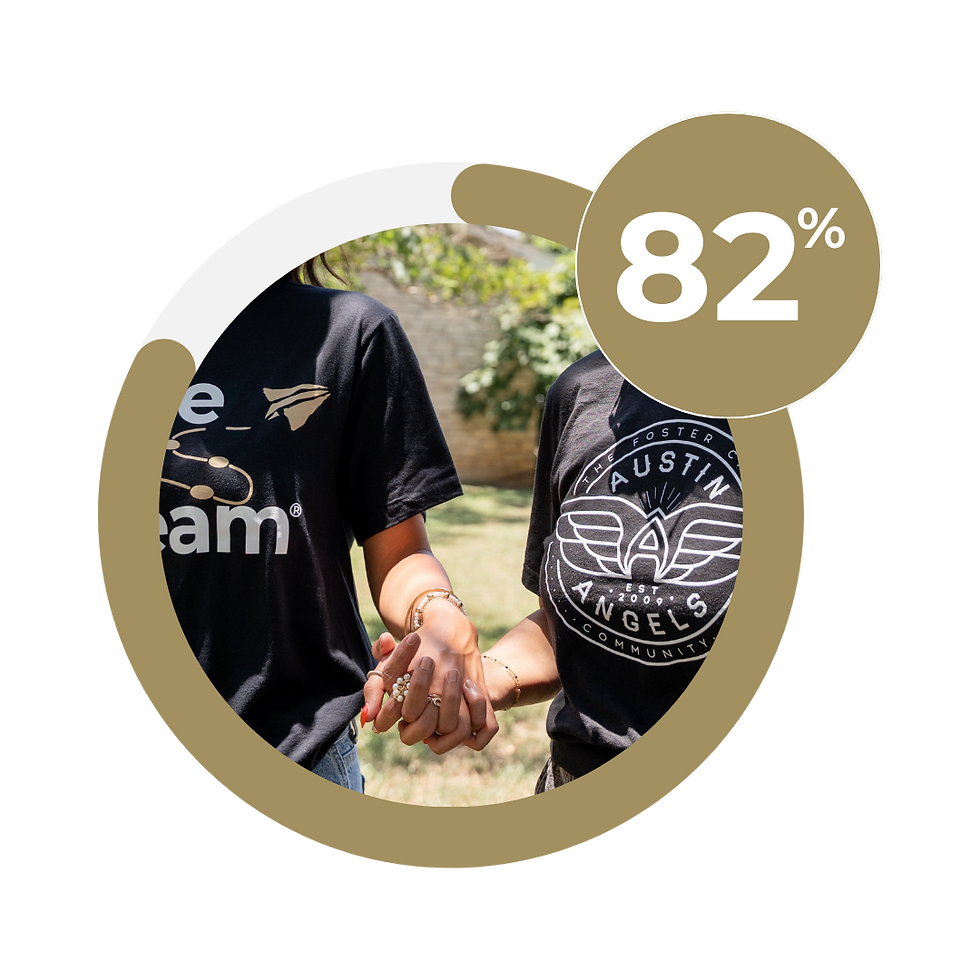
82% youth, families, and volunteers say they will stay connected after the program formally ends.
Did you know...
Each year, thousands of youth age out of foster care without the support they need to thrive. With limited resources and no permanent connections, many face overwhelming challenges, including homelessness, unemployment, and a lack of educational success.
Our programs were built to change this.
Our programs create relational permanence by building lasting, supportive connections. Through consistent, personalized support and a strong network, youth are matched with caring adults for an average of 3.4 years — nearly double the national average — ensuring meaningful, stable relationships that extend beyond their time in foster care. This continuity provides a critical foundation for success as they transition to adulthood.

91% caregivers and youth report an increase in their sense of normalcy, emotional health, and social well-being because of our programs.
Did you know...
Children experiencing foster care often face significant challenges to their emotional and social well-being due to instability, frequent relocations, and the trauma of separation from their families. We know that 80% experience significant mental health issues and only
30-50% feel socially connected. This lack of consistency and security can hinder their ability to form healthy, trusting relationships and develop critical social skills. Additionally, they often miss out on everyday experiences that promote a sense of normalcy, such as extracurricular activities, family routines, and peer interactions.
Our programs were built to change this.
Achieving normalcy and emotional and social well-being are critical to healthy development. Our ability to increase these social determinants of health will lead to better short- and long-term outcomes – including confidence, resilience, and overall development – making it easier to succeed in school and in life.

87% of Dare to Dream® and Love Box® caregivers report that their youth have graduated on time or are expected to do so.
Did you know...
Less than 50% of youth in foster care graduate high school by age 18, compared to approximately 85% of youth in the general population.
Our programs were built to change this.
By providing consistent mentorship, academic support, and relational stability, our programs help close the educational achievement gap for youth in foster care.
Our data shows a 82% increase in high school graduation compared to the national average.

Did you know...
Using a scale of -100 to +100, these Net Promoter Scores (NPS) gauge satisfaction and the likelihood of recommendation among volunteers and caregivers, reflecting how effectively the organization engages and supports them.
Our programs gauge this.
Our scores reflect the strong satisfaction and loyalty of our volunteers and caregivers. These scores are a testament to the deep, meaningful relationships we build through personalized support, consistent engagement, and our commitment to addressing the unique needs of those we walk alongside. These scores demonstrate the effectiveness and impact of our work.
.png)
Past Years
2024
2023
2022
2021
2020
2019
2018